


Latest Articles
Articles
 Najil Konnara
12 Jul 2026
Najil Konnara
12 Jul 2026
Culture, Ecology and Indigenous Knowledge: An Ethnoscientific Reading of the Santhals
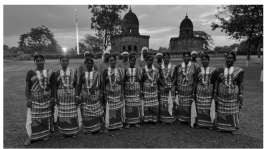
The concept of ethnoscience serves as a fundamental analytical framework in the article The Cultural Dimension of Environment: Ethnoscientific Study on Santhal Community in Eastern India by Koustab Majumdar and Dipankar Chatterjee. It illustrates a comprehensive understanding of how the Santhal community’s interaction with the natural environment is mediated by a culturally grounded system of knowledge.
Within the context of a specialised branch of anthropology, ethnoscience is principally focused on examining how diverse indigenous communities conceptualise, classify and transmit knowledge about the world around them. It critiques the dominance of Western scientific epistemology by asserting that these systems should not be regarded as primitive or unscientific. Instead, they constitute equally valid, rational and internally structured systems within their respective cultural contexts.
In the case of the Santhal community, the ethnoscientific approach reveals that their environmental observation is not based solely on empirical evidence. It is also deeply embedded in social practices, cultural significance and sacred beliefs.
The article persuasively illustrates that the environment is not merely a collection of external resources to be exploited or dominated. Rather, it is an integral part of a living and highly interconnected system in which humans, fauna, flora and supernatural elements coexist through interdependent relationships.
Land is not only an economic resource for agricultural development, but also a cultural and spiritual element associated with genealogy, identity and spiritual practices. Similarly, the forest is understood not merely as a source of food and resources, but as a sacred space imbued with spiritual forces. Human contact with these resources is regulated in ways that promote balanced ecological harmony.
Najil Konnara
12 Jul 2026
Articles

 Annabel Teh Gallop
12 Jul 2026
Annabel Teh Gallop
12 Jul 2026
The Art of the Qur’an in the Indian Ocean World: A View from Southeast Asia
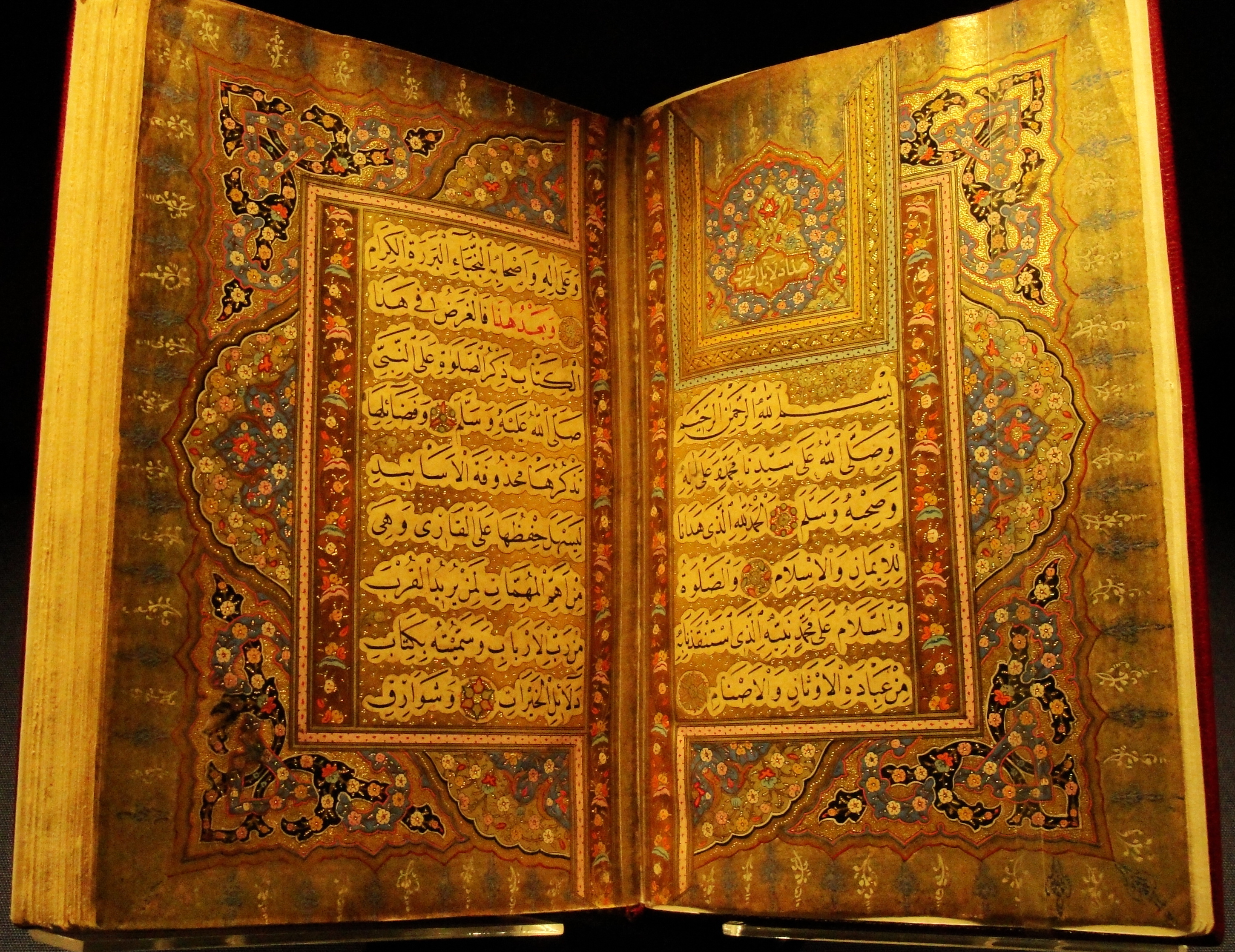
When I first began exploring the art of the Qur’an in Southeast Asia more than twenty years ago, the canvas was essentially blank. The art of the Islamic book had rarely attracted attention in the Malay world or Nusantara, and almost no photographs of illuminated Southeast Asian Qur’an manuscripts had ever been published.
This was because philological studies, and therefore university teaching programmes, focused on Indonesian and Malay manuscripts containing traditionally focused texts in vernacular languages such as Malay, Acehnese, Javanese, and Bugis. There was little interest in the codicology or materiality of manuscripts, or in books in Arabic from the region, as these were generally seen as poor relations of their counterparts in the central Islamic lands.
But once the hunt began, many beautiful Islamic manuscripts from Nusantara were found hiding in plain sight, in public libraries and museums, as well as in mosques and private collections. They were increasingly brought to light by digitisation programmes such as the Endangered Archives Programme and DREAMSEA.
Annabel Teh Gallop
12 Jul 2026
Articles

 Aakhil Perumugham
12 Jul 2026
Aakhil Perumugham
12 Jul 2026
‘Seas of All’: Transcending Traditional Boundaries of Early Modern Historiography
The global historical studies after the 1950s, especially in fields such as maritime history, cross-cultural history, cliometrics, and global history, have challenged the traditional boundaries of area studies, the teleologies of European expansion, and the constraints of nationalist historiography, and shifted from a collection of isolated regional histories toward a more unified, transregional framework.
One of the most significant methodologies to emerge after the 2000s was the concept of Connected Histories proposed by the Indian historian Sanjay Subrahmanyam in 1997. Central to this shift was his work Connected Histories: Notes towards a Reconfiguration of Early Modern Eurasia from 1997, countering the Southeast Asian and Eurasian historian Victor Lieberman’s Strange Parallels from 2003.
By integrating multilingual archives, including Persian, Portuguese, Dutch, and other indigenous sources in Asian languages, and capturing the polyphonic nature of early modern interactions, the academic corpus provides a sophisticated re-evaluation of the political economy, social networks, and intellectual encounters that defined the maritime world between the fifteenth and eighteenth centuries. It also contributed to the emergence of a distinct field of Indian Ocean Studies, which depends on the coming together of historical scholarship in a post-colonial world and the development of World History as a discipline. This framework often offered a moral counterweight to both Western exceptionalism and modern nationalism.
Aakhil Perumugham
12 Jul 2026
Articles

 Mohammed Irshad
12 Jul 2026
Mohammed Irshad
12 Jul 2026
Writing the Indian Ocean: The Ruznāmaʾ of Al Failakawi and the Ocean as Archive
In the growing field of Indian Ocean history, scholars have increasingly turned away from traditional archives such as state records, imperial correspondence, and official maritime documents, and toward vernacular materials that record history from within practice rather than about it. Among these materials, none has been more illuminating in recent scholarship than the ruznāma, the ship’s logbook of the Kuwaiti dhow captain Abdulmajeed al Failakawi, central to Fahad Ahmad Bishara’s Monsoon Voyagers: An Indian Ocean History. Drawing on this logbook and related manuscripts, Bishara reconstructs not only a single voyage made in 1924–1925 but also an entire maritime world defined by circulation, negotiation, and connective practice.
Far from being marginal curiosities, these logbooks are themselves archives, assemblages of weather observations, commercial records, contracts, navigational notes, and legal formulas that chart the lived experience of maritime actors. To place the Indian Ocean as archive is to pay attention to its textual traces: not only printed books in European languages, but the manuscript culture of Indian Ocean seafarers whose writings mediated commerce, law, and identity across littorals. In this essay, I trace how the ruznāma emerges as a deeply archival form in Bishara’s study, and how it helps us understand the Indian Ocean as a space of recorded memory far beyond state bureaucracies.
Mohammed Irshad
12 Jul 2026
Articles

 Dale Hudson
11 Jul 2026
Dale Hudson
11 Jul 2026
Listening and seeing beyond terracentric archives and documents: Visual arts on fluid and littoral places within Indian Ocean worlds
Once associated with institutions that collected and preserved official documents as records for future generations, scholars today understand archives as epistemological sites that render selected histories and stories audible, legible, and visible. Colonial, corporate, police, and state archives in particular operate with agendas and biases. By design, ignorance, or neglect, they can render other histories and stories inaudible, illegible, and invisible.
Scholars also consider sites where histories and stories accumulate outside official archiving initiatives, including in and on bodies, including human bodies alongside land and water bodies. Such bodies offer valuable insights into history in Indian Ocean worlds. In this article, I trace how Shaina Anand and Ashok Sukumaran’s film From Gulf to Gulf to Gulf and Huda Tayob’s multimedia installation Index of Edges emerge at the confluence of critical archive studies, Indian Ocean studies, and research-led visual arts practice.
Dale Hudson
11 Jul 2026
Articles
 Midlaj Wafy Kodiyathur
19 May 2026
Midlaj Wafy Kodiyathur
19 May 2026
Dreams That Authorize: ‘Ijaza’ Across the Boundary of Sleep
It was during the early phases of my exploration into the role of dreams in Islam that I found myself in a conversation that would anchor my entire research topic. I was speaking with a family acquaintance, a man deeply embedded in the Sufi landscape of Kerala, specifically a murid (disciple) following the Chishti lineage. We were discussing routine matters when, almost unintentionally, he let something slip.
Midlaj Wafy Kodiyathur
19 May 2026
Articles

 Shafeeq Edakkanad
15 May 2026
Shafeeq Edakkanad
15 May 2026
In the City of Sufis
The name Gulbarga means "City of Flowers," the Sufis and dargahs are the flowers here. The city flourishes with the presence of these Sufis and mazars.On January 14, 2025. Through the cool breath of dawn Basava Express which departed from Mysuru on the noon of the 13th, pulled into Kalaburagi station at the still hour of 4:15 am
Shafeeq Edakkanad
15 May 2026
Articles

 Sayyaf Pukayoor
8 May 2026
Sayyaf Pukayoor
8 May 2026
Oneiric Theology of Islam: How Islam differs from the Western Dreamscape
She had been struggling for months with an unknown disease. Stinging pain wracked her entire body. She consulted a handful of doctors. But their efforts were in vain. Finally, on a moonlit night, she had a dream in which, standing on the balcony, a giant snake rushed at her. She shot up in bed with a blood-curdling scream. By the morning, she dialled a religious scholar she had consulted before, sharing her last night dream. The scholar invited her to his majlis. At the next movement, she rushed to the scholar accompanied by her husband. “The dream was a visual clarification of your disease,” the scholar reflected. “It is a jinn disguised as a snake (Nāgam) that is causing you this affliction.” The conversation with this lady made me think a lot. How does Islam define dreams?
Sayyaf Pukayoor
8 May 2026
Articles
 Afeef Ahmed
2 Jan 2026
Afeef Ahmed
2 Jan 2026
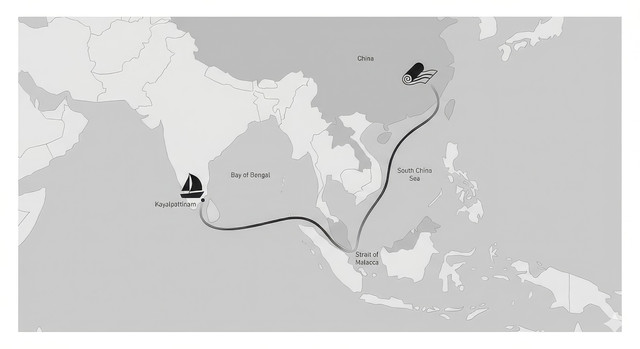
Ponies, Pearls and Power: Final Part Chinese and European Sources: A Wider Indian Ocean Perspective
The broader Indian Ocean world also took note of the Tibi family’s activities, as shown by Chinese imperial records and European travelogues. As mentioned, Marco Polo provides an outsider’s glimpse around 1293. In addition to noting Ma’bar’s horse imports, Polo specifically records that an ambassador (‘Chāmalittin’) from "the Sultan of Ma bar" arrived at the court of Kublai Khan in the 1280s.
Afeef Ahmed
2 Jan 2026