
Dreams That Authorize: ‘Ijaza’ Across the Boundary of Sleep
 By Midlaj Wafy Kodiyathur
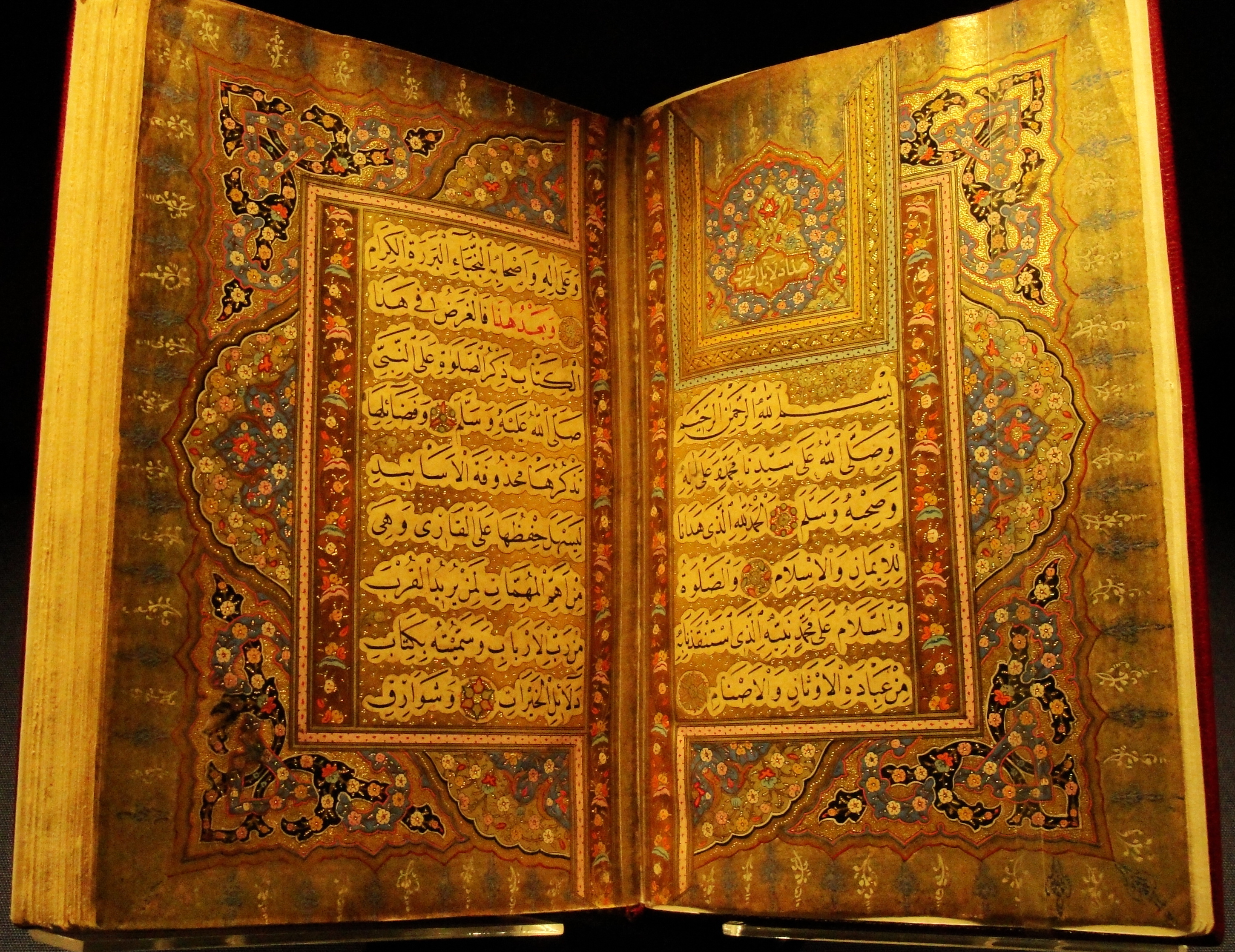
It was during the early phases of my exploration into the role of dreams in Islam that I found myself in a conversation that would anchor my entire research topic. I was speaking with a family acquaintance, a man deeply embedded in the Sufi landscape of Kerala, specifically a murid (disciple) following the Chishti lineage. We were discussing routine matters when, almost unintentionally, he let something slip. He mentioned, in passing, that he had seen the Prophet in a dream. There was an immediate shift in the air. In the traditional Islamic and Sufi milieu I was observing, there exists a deeply ingrained caution: one should not speak of their dreams, especially dreams of the Prophet. The reasons are manifold — fear of ego, the risk of misinterpretation, or simply the sacredness of the encounter.
Seeing his hesitation, my academic curiosity sharpened into a gentle insistence. Reluctantly, he began to narrate. As he spoke of the dream, his hand drifted unconsciously to his turban (talappav). He touched the fabric with a reverence that was palpable, and with immense joy, he explained, “It is with the ijaza (spiritual authorization) of the Prophet that I wear this turban.” For him, the dream was not just a vision; it was a moment of transmission. It had transformed a simple piece of cloth into an object of barakah, a physical testament to a spiritual encounter. Over the following months, I would often see him urging his friends and companions to wear the turban, extolling its virtues — virtues that were now, for him, validated by that nocturnal visit.
This encounter left me with a set of questions that became the bedrock of this inquiry. How does a dream, an inherently private and ephemeral experience, become such a foundational pillar of a person’s public and spiritual identity? When this dream is narrated to others, how is its authority negotiated and affirmed? How does it move from the interior landscape of the mind to become a shared reality that influences social behavior and religious practice?
“When Muslims speak of ‘true dreams’ (ru’ya ṣāliḥa), they’re talking about experiences understood as a form of divine inspiration (ilhām). But here’s the crucial distinction: no matter how powerful or sacred a dream feels, it cannot determine what’s halal or haram.”
For a long time, the study of dreams was dominated by a Freudian lens, which saw them as a window into individual psychology, a mechanism to protect sleep or a cipher for repressed desires. But sitting across from this man, watching him touch his turban, I realized that such an individualistic framework was insufficient. This was not just about his psyche; it was about community, tradition, and a very real form of spiritual authority.
As anthropologists like Amira Mittermaier have recently explored, dreams in many Islamic contexts are not merely internal productions but are understood as encounters with an external reality, a space where the divine and the human can meet. They are, as she puts it, a part of a larger “imaginal” realm that is very real to those who experience it.
The question then became: if a simple disciple can derive such profound personal authority from a dream, what happens when this logic is applied to the highest echelons of Sufi hierarchy? How have dreams been used not just to guide an individual, but to shape the lineage and legitimacy of an entire Sufi order?
The Social Life of Dreams in Islam
In Islamic tradition, dreams aren’t just private psychological events happening inside someone’s head; they come alive through community and shared meaning. When Muslims speak of “true dreams” (ru’ya ṣāliḥa), they’re talking about experiences understood as a form of divine inspiration (ilhām). But here’s the crucial distinction: no matter how powerful or sacred a dream feels, it cannot determine what’s halal or haram. Islamic law doesn’t work that way.
So when you ask how a dream becomes sanctified in someone’s life and how its authenticity gets negotiated, the answer lies in community. A dream gains weight not just from the dreamer’s inner conviction, but through narration, interpretation, and recognition by listeners, elders, spiritual guides, or fellow believers who accept it as meaningful.
This connects to Sufi concepts like al-ijāzah al-Uwaysiyyah, where someone receives spiritual authorization through a visionary connection without ever meeting their teacher physically. Even in such cases, the experience guides the individual personally but doesn’t create new religious rulings.
This understanding moves beyond Freudian readings that reduce dreams to individual psychology, repressed desires, or personal conflicts. Contemporary scholars like Amira Mittermaier show how dreams in Muslim societies function within shared moral worlds.

The theology here is precise: during the Prophet Muhammad’s time, dreams were part of revelation (wahy). As Imam al-Busiri beautifully put it, the Prophet’s heart stayed awake even when his eyes slept — meaning revelation came from outside, not from himself. But after the Prophet, that door closed. No one’s dreams can independently determine law.
What continues instead is what we might call the social life of dreams. People tell them, interpret them, and live through them together. So a dream becomes sacred through ongoing interaction between personal experience, Sufi spiritual imagination, and communal validation. Dreams still shape how people understand their ethics and devotion; they just don’t replace the formal sources of Islamic law.
Dream as Authorization
In Sufi traditions, spiritual practices like ratibs, wirds, and gatherings of dhikr are not simply things you pick up and do on your own. For them to be effective, they require the guidance and authorization — the ijazah — of a spiritual teacher. The understanding is that both God and the guide work together to show the seeker the path. Without that connection to a teacher, the practices lack something essential. It’s like trying to find your way through a forest without someone who knows the terrain. The guide has walked the path before and can lead you safely toward liberation.

The great scholar Imam al-Haddad emphasized just how essential this authorization is. He taught that when a teacher gives a student permission to recite specific prayers or litanies, certain spiritual etiquettes must be observed. There’s a common practice of reciting Sūrat al-Fātiḥa when granting this permission, directing its blessings toward the intention behind the authorization. This ritual connects the student not just to the teacher, but to the whole chain of transmission stretching back through generations.
“Contemporary scholars like Amira Mittermaier show how dreams in Muslim societies function within shared moral worlds. The theology here is precise: during the Prophet Muhammad’s time, dreams were part of revelation (wahy).”
The Fātiḥa serves as an opening, a prayer that the practice bears fruit in the student’s life. One way to understand this is through a simple image: when you want to make yogurt, you need to add a bit of existing yogurt to fresh milk. That small amount of starter culture transforms the whole batch. Similarly, receiving a dhikr or ratib directly from a living teacher carries something intangible, a spiritual starter, if you will. The practice becomes more effective, more alive, because it comes through a living chain of transmission.
This is why seekers have always sought out teachers, traveling great distances not just to learn words, but to receive them from someone whose own life has been transformed by those same words.
Fath al-Raḥmān: Ilham, Dreams, and the Making of a Sacred Text
For centuries, Muslims have recited Dala'il al-Khayrat, a celebrated collection of prayers upon the Prophet. In East Africa, a similar work emerged: Fath al-Raḥmān, compiled by Shaykh Hashim of Harar.
Inspired by the Qur’anic command to send blessings upon the Prophet, the book became central to Harar’s spiritual life and spread across the Horn of Africa. Like Imam al-Jazuli’s North African masterpiece, it was a living connection to the Prophet, recited rhythmically in weekly gatherings.
Though the tradition weakened over time, preservation efforts such as the Threads of Memory Project have recently republished the text to safeguard it for future generations.
“When Shaykh Hāshim returned to Harar, he got his community deeply engaged in sending blessings to the Prophet. As his own love for the Prophet grew, he started experiencing what he called ‘openings’, moments of spiritual insight he felt were coming directly from God.”
The man who wrote this book, Shaykh Hāshim, lived a life that matched the spirit of his work. He grew up in Harar’s scholarly environment, trained with intense devotion, and according to local stories, he had a visionary encounter with a Sufi master who guided him. He eventually returned home to reform religious life and encourage disciplined spirituality among his people. So Fath al-Raḥmān is more than just a collection of prayers, it’s a piece of history showing how Muslim communities in East Africa created their own local traditions while connecting to the wider Islamic world. It’s their version of the Dalā’il al-Khayrāt tradition, adapted and renewed across the Indian Ocean region.
The story of how Fath al-Raḥmān came to be written shows us something important about how dreams work in Islamic devotion. When Shaykh Hāshim returned to Harar, he got his community deeply engaged in sending blessings to the Prophet. As his own love for the Prophet grew, he started experiencing what he called “openings”, moments of spiritual insight he felt were coming directly from God. In the book’s introduction, he explains that these prayers didn’t come from his own thinking. They came through ilhām, divine inspiration. And later, these prayers were confirmed when he actually saw the Prophet in visionary encounters.
This connects to something important in Islamic tradition. There’s a famous saying recorded in Sahih al-Bukhari that whoever sees the Prophet in a dream has truly seen him, because Satan cannot take his form. For Muslims, these aren’t ordinary dreams, they’re real encounters.
Even though Shaykh Hāshim had these powerful visions, he never claimed they gave him authority to change religious law. In Islamic tradition, dreams like this are personal validation, they confirm you’re on the right path, but they don’t become proof others must accept. Still, he shared his experiences publicly, as the Qur’an encourages speaking of God’s blessings. By doing so, he placed his vision into a shared space where its authenticity was affirmed not by his personal claim alone, but through how the community received his book, through scholarly tradition, and through the devotion of all who recited his prayers. The community’s acceptance, not just the dream itself, gave weight to his vision.
Dalā’il al-Khayrāt and the Promise of Vision
Dalā’il al-Khayrāt belongs to a longer tradition of prayer collections. Before Imam al-Jazuli, there was Qāḍī ‘Iyāḍ’s Kitāb al-Shifā in the 12th century and Muḥammad al-Jazārī’s Ḥiṣn al-Ḥaṣīn in the 15th. All these books draw from hadith about the benefits of sending blessings upon the Prophet. When you pray upon him, you aren’t just reciting words, you call forth his presence, seek his intercession, and ask for his protection. Crucially, you also ask to see him in a dream. And because of the famous hadith that whoever sees the Prophet in a dream has truly seen him, such a vision becomes, in a real sense, an actual encounter.
The story of how Jazūlī came to compile his book reflects exactly this logic. According to tradition, he went to a well to make his ablutions but couldn’t draw any water. A young girl saw his struggle, came down, and spat into the well. Immediately, water poured forth in abundance. When the astonished shaykh asked how she had attained such a spiritual rank, she replied: “By saying the blessings upon him whom beasts lovingly followed as he walked through the wilds,” in other words, through constantly praying upon the Prophet. That moment moved him to compile his famous collection.
What’s striking is that the inspiration comes not from a famous scholar but from a young girl whose authority rests entirely on her devotional practice. Her power flows from love for the Prophet, cultivated through constant blessings. This resonates with what the Dalā’il itself promises: the first chapter explicitly lists seeing the Prophet in a dream among the benefits of this practice.
The structure of the book reflects this purpose. It opens with “The Chapter on the Benefits of Invoking Prayers upon the Prophet,” laying out why you should do this and what you can expect. Then comes a section listing 201 names and epithets of the Prophet, descriptions like “Light,” “Mercy,” and “Guide”, each drawing you deeper into contemplation of who he is. After that comes a description of his grave in Medina, often accompanied by a schematic drawing of the tomb. This serves almost like a pilgrimage substitute: for those who cannot travel to Medina, visualizing the sacred space becomes its own form of devotion.
The main body consists of 437 blessing prayers, divided into eight sections for the days of the week. By the 16th century, manuscripts began showing additional divisions into quarters, thirds, and halves, indicating the book was also used in communal settings where groups would recite portions together.
What this structure reveals is that Dalā’il al-Khayrāt was designed as a practical tool for transformation. It takes the raw material of hadith, the promises of blessing, intercession, and visionary encounter, and turns it into a daily discipline. The devotee who recites these prayers with sincerity isn’t just asking to see the Prophet in a dream someday. They are gradually reshaping their inner world, cultivating the love that makes such a vision possible. The dream becomes not a random event but the fruit of consistent practice, the natural outcome of a heart trained to dwell constantly on the Beloved.
This is precisely the logic we saw with Shaykh Hāshim in Harar, and with the young girl in Fes who attained her spiritual rank “by making constant prayers on behalf the Best of Creation, to the number of breaths and heartbeats.” The book provides the words; the devotee provides the breath; and between them, the dream becomes possible.
Tanbīh al-Anām: The Prophet’s Kiss in a Dream
The story of Tanbīh al-Anām takes us from the city of Kairouan in North Africa to the Malabar coast of India, following the same currents of devotional literature we’ve traced with Dalā’il al-Khayrāt and Fath al-Raḥmān. Written by ‘Abd al-Jalīl ibn Muḥammad ibn ‘Azūm al-Murādī al-Qayrawānī, who died in 1553, this collection of praises and blessings upon the Prophet Muḥammad spread across the Indian Ocean world through Sufi networks, particularly the Shādhilī Ṭarīqah, which connected North Africa, the Hijaz, and South India.
The manuscript found in Ponnani’s Kutub Khana, copied in 1025 AH (around 1616 CE) by Muḥammad ibn Ali Hasan from Areekode, shows that this African text had reached Malabar within decades of its composition. The scribe even noted the Malayalam month along with the Hijrī date, grounding this imported devotion in local time and place.
“He said, ‘Blessings and peace upon you, O Messenger of God,’ and declared his hope to be in his neighborhood and to receive his intercession. The Prophet took his hand, kissed him, and smiled, swearing three times, ‘By God, by God’, as if confirming something.”
What makes Tanbīh al-Anām especially relevant to our discussion is what its author reveals in the introduction. ‘Abd al-Jalīl tells us that he organized the book into chapters and sections to make it easier for readers and listeners to engage with the prayers. But then he shares something remarkable: he personally tested the efficacy of these blessings, reciting them for specific purposes, and witnessed “secrets and effects” from his practice. Then came the dreams.
He writes that someone appeared to him in sleep and told him certain things. He also composed some of the prayers in a dream. During the period he was arranging the book, he dreamed that he was riding a mule, trying to catch up with a group that had gone ahead, but the animal lagged behind. A man restrained the mule, preventing him from reaching them. Then another man, appearing righteous and noble, intervened, scolded the first, and said: “Let him go, for God has forgiven him and granted his intercession for his family.” When he woke, he understood that the rescuer was ‘Alī ibn Abī Ṭālib, and he knew this was a blessing from his service to the Prophet.

Later, he saw the Prophet himself in a dream, in a room of his house that was illuminated by the light of his noble face. He said, “Blessings and peace upon you, O Messenger of God,” and declared his hope to be in his neighborhood and to receive his intercession. The Prophet took his hand, kissed him, and smiled, swearing three times, “By God, by God”, as if confirming something. Then a deceased neighbor appeared and told him, “You are among his servants, the praisers.” When asked how he knew this, the neighbor replied, “By God, you were mentioned in heaven for this.” He woke up overjoyed and composed two verses of poetry commemorating the vision.
Finally, he saw his deceased father, who was overjoyed with him. When asked if his son had benefited him, the father swore by God that he had, and explained that it was through his authorship of these prayers upon the Prophet. He had been mentioned, his father said, in the highest assembly.
This introduction is extraordinary because it mirrors exactly the themes we’ve been tracing throughout this article. ‘Abd al-Jalīl doesn’t claim his dreams give him authority to change religious law. Instead, the dreams function as personal validation, confirmation that his work is accepted, that he is counted among the Prophet’s servants, that his father has benefited. The dreams are narrated not as proof for others but as testimony to the barakah flowing from devotion to the Prophet.
And significantly, the authority of the book rests partly on these visionary encounters. The community that recited Tanbīh al-Anām in North Africa and Malabar didn’t just accept it because of scholarly credentials. They accepted it because its author had seen the Prophet, because his dreams confirmed its value, because the tradition of dream-validation we saw with Shaykh Hāshim and the girl at the well continued here.
The manuscript from Ponnani, like the one from the Musliyarakath family in Kodiyathur, represents this living tradition crossing oceans. That these copies survived, that they were transcribed with such care, that they remained free of marginal commentary, all this suggests communities who preserved them treated them as sacred objects, not scholarly texts. They were recited for healing, for overcoming difficulties, for drawing near to the Prophet. And in that recitation, the dreams of a North African scholar from five centuries ago continued to resonate in the prayer halls of Malabar, connecting the faithful across time and space through the simple act of sending blessings upon the Beloved.
“He Healed It”: The Dream That Repaired a Sacred Text
The story of Tanbīh al-Anām crossing oceans and finding a home in Malabar leads us to another remarkable example of dream authority in the same region, one that connects directly to the scholarly lineage of Ponnani itself. This involves the Sufi saint known as Swadakathullah al-Qāhiri (may God have mercy on him), whose full name and story are preserved in his Mawlid text composed in his honor.
According to this hagiographical account, Swadakathullah found himself facing a spiritual dilemma regarding a well-known text called Hidāyath al-Azkiyā’, a work on Sufi ethics and practices. He felt that certain portions of the book, specifically sections dealing with grammar (naḥw) or eloquent expression (faṣḥ), required correction. But this was not just any book. It was associated with the great Zainuddin Makhdūm (the first), the revered scholar and spiritual master of Ponnani, who had long since passed away. How could anyone presume to correct the work of such a towering figure without explicit authorization?
“The answer came in a dream. One night, Zainuddin Makhdūm himself appeared to Swadakathullah in his sleep. In this visionary encounter, the deceased scholar gave him permission, ijāzah, to make the necessary corrections to Hidāyath al-Azkiyā’.”
This dream was not merely a personal consolation but an act of spiritual transmission. The authority to edit and amend the text, which would normally require a living chain of permission from teacher to student, was granted directly through a dream.
This moment is preserved in the Mawlid text written about Swadakathullah, in a line that reads:
“Ghawth al-anām wa Hidāyath al-Adhkiyā’
fī al-manām ra’āhu Ṣadaqat Allāh, fa-hā shafāhā
wa hādhā dhāka akhbār mā taḥwī khalīl ‘urūḍ
Ṣadaqat Allāh.”
This poetic line captures the essence of the event: the spiritual succor of humanity, through Hidāyath al-Adhkiyā’, was seen in the dream by Ṣadaqat Allāh, and he thus healed it, this is among the greatest news contained within the life of Ṣadaqat Allāh.
“The line from Swadakathullah’s Mawlid that describes this event, ‘fa-hā shifāhā’, says that he ‘healed’ the text.”
This story is striking because it mirrors almost exactly the logic we have seen throughout this article. Just as Shaykh Hāshim received confirmation for his Fath al-Raḥmān through visionary encounters with the Prophet, just as ‘Abd al-Jalīl saw the Prophet and ‘Alī in dreams that validated his compilation of Tanbīh al-Anām, and just as the young girl at the well derived her spiritual authority from constant prayer rather than formal scholarship, here, Swadakathullah receives authorization from a deceased master in a dream.
The dream functions as a legitimate channel for ijāzah. The authority to correct a text, which would normally require a living teacher’s permission, is granted across the boundary between waking and sleeping, between the living and the dead.
The line from Swadakathullah’s Mawlid that describes this event, “fa-hā shifāhā”, says that he “healed” the text. This choice of words is beautiful. The text had something broken or needing correction, and through the dream-granted authority, it was healed. The book itself becomes like a patient, and the dream becomes the prescription.
This resonates with the broader tradition we have traced: texts like Dalā’il al-Khayrāt and Tanbīh al-Anām are not merely read but recited, not merely studied but internalized. They are understood to carry healing power, protective power, the power to bring the Prophet near. And dreams are the proof, the sign that the practice is working, that the blessings are accepted, that the chain remains unbroken.
From North Africa to Malabar, from the 15th century to today, this understanding persists: the Prophet and his heirs can be reached through dreams, and those dreams can authorize, validate, and heal.
Conclusion
What connects all these stories — the Chishti disciple in Kerala who touched his turban after dreaming of the Prophet, to al-Shādhilī inheriting spiritual stations without physical meeting, to Shaykh Hāshim composing Fath al-Raḥmān after visionary encounters, to Jazūlī inspired by a young girl’s blessing, to ‘Abd al-Jalīl seeing the Prophet and ‘Alī in dreams while compiling Tanbīh al-Anām, and finally to Swadakathullah receiving ijāzah from the deceased Zainuddin Makhdūm to correct a sacred text — is a consistent understanding across time and space.
Dreams in Islamic tradition are not merely private psychological events but socially recognized channels of spiritual authority. They function as personal validation rather than legal proof, confirming for the dreamer and their community that their path is accepted, their devotion is seen, and their connection to the Prophet and his heirs remains alive.
From North Africa to Malabar, from the 15th century to today, these dream encounters are narrated, preserved in manuscripts, recited in Mawlid gatherings, and passed down through families and Sufi lineages. They become part of the living memory of Muslim communities, proof that the Prophet’s promise, whoever sees me in a dream has truly seen me, continues to unfold across generations.
The books themselves, Dalā’il al-Khayrāt, Tanbīh al-Anām, Hidāyath al-Adhkiyā’, become vessels for this dream-authority, carrying not just words but the barakah of visionary encounters, connecting those who recite them to the unseen world where the Prophet and his heirs remain present, listening, and responding to those who love them.