
Oneiric Theology of Islam: How Islam differs from the Western Dreamscape
 By Sayyaf Pukayoor

She had been struggling for months with an unknown disease. Stinging pain wracked her entire body. She consulted a handful of doctors. But their efforts were in vain. Finally, on a moonlit night, she had a dream in which, standing on the balcony, a giant snake rushed at her. She shot up in bed with a blood-curdling scream. By the morning, she dialled a religious scholar she had consulted before, sharing her last night dream. The scholar invited her to his majlis. At the next movement, she rushed to the scholar accompanied by her husband. “The dream was a visual clarification of your disease,” the scholar reflected. “It is a jinn disguised as a snake (Nāgam) that is causing you this affliction.” The conversation with this lady made me think a lot. How does Islam define dreams?
In the Islamic framework, dreams have been an active role in shaping its epistemology and theology. The phenomenon of dreaming transcends mere subconscious cognitive activity, occupying a particular spiritual and prophetic dimension. While modern psychology views dreams as a by-product of the mind or unconscious desires, the Islamic tradition recognizes the oneiric state as a complex intersection of psychology, metaphysics, and divine communication. Deeply rooted in the Quran and Sunnah, dreams are not merely a passive experience, but rather a valid source of divine guidance. This framework is notably discussed in the Quranic narrations, such as the dreams of Prophet Yusuf and Ibrahim, which establish the dreamscape as a legitimate medium for divine intervention. Writing short books on dreams was more active in the Middle Ages than works of Qur’anic hermeneutics. Ibn Arabi’s ‘Fusoos-ul-Hikam’ was written entirely through the teachings given by the Prophet [PBUH] in his dreams.
Had Islam given less consideration to dreams, the Azan would never have been established as the call to prayer. No Greek texts would have been translated, and even no Ottoman caliphate would have written its milestone in history, and Constantinople would never have belonged to the Ummah. In the case of dreams, Islamic tradition does not entirely depart from what the West tends to acknowledge; to a degree, both converge. For instance, imagine if everyone wanted you to get married and you also desired it. Then you would likely dream of it. But the key condition is that it must also be recognised as God’s guidance.
The evolution of dream theory in Western thought
Across the history of intellectual discourse, dreams have been understood in many ways. René Descartes points out that there are no clear, decisive signs that help us to distinguish whether we are asleep or awake. He uses this nature of dreams to prove the incapacity of the senses to gain knowledge, arguing that knowledge is attainable only through reason. Most of the anthropological discussions on dreams are rooted in this Cartesian framework. In his book Primitive Culture, the Victorian anthropologist Edward Burnett Tylor, who attempted to study the anthropology of dreams, argues that primitive humans are not interested in distinguishing between dreams and reality. Although they can recognize that a man has died, they believe that his spirit can still communicate with them, and this spirit’s presence was real.
Friedrich Nietzsche proposed that primitive civilizations considered dreams as a reality; this consideration compelled them to believe in gods and ghosts for thousands of years. Sigmund Freud goes a little further and argues that primitive humans, children, and the mentally ill are unable to distinguish between reality and fantasy. But the common point where the Western scholars intersect is what Amira Mittermaier mentioned: those who lack rationality are unable to distinguish between dream and reality, and the civilized Europeans wake up from their slumber and realize that it was only a dream.
Had Islam given less consideration to dreams, the Azan would never have been established as the call to prayer. No Greek texts would have been translated, and even no Ottoman caliphate would have written its milestone in history.
Not only were they unaware of the difference between dream and reality, but the Westerners themselves noted this blindness, as Nietzsche, Tylor, and Freud have observed. This epistemological curiosity can be found in The Elementary Forms of Religious Life, which refutes E.B. Tylor, in Levy Bruhl’s How Natives Think, and in J.S. Lincoln’s "The Dream in Primitive Cultures".
Psychoanalysis has had a strong influence on anthropological studies of dreams. Using psychoanalytic theory, Bronisław Malinowski argues that the reason for the rarity of dreams among primitive Melanesians was that they were sexually unregulated, and that the dreams were caused by sexual dissatisfaction. Conducting a case study on schoolchildren in Papua New Guinea, Tuzin wrote that ghostly characters in dreams arise from the dreamer’s unconscious hostility towards family members.
In the Islamic framework, dreams can be classified as ru’ya (the true vision from God), hulm (terrifying dreams from Iblees), and adghāth ahlām (confused dreams arising from physiological or psychological disturbance).
The application of Western theories to ethnographic studies, teaching these Western theories as universal, has led to the rejection of diverse narratives about dreams and concepts. Many anthropologists, when studying dreams and concepts, rely solely on psychoanalysis, which reduces them to manifestations of the unconscious mind, conveniently ignoring how each society understands its dreams. Throughout history, dreams have been understood, defined, classified, experienced, remembered, forgotten, transmitted, written, presented, and interpreted in a variety of ways. Vincent Crapanzano reminds us that dreams should not be understood in isolation from the theories and understandings formed by those who see them, and that each of them embodies specific moral, religious, social, and political perspectives. To appreciate the uniqueness of dreams and give them multiple dimensions, one must resist treating certain theories as universal.
Dream in Islam: The oneiric hierarchy between divine revelation and the subconscious.
The Islamic engagement with dreams is rooted in a prophetic tradition that defines sleep as a potential opening to higher reality, rather than a cessation of consciousness. In the Islamic framework, dreams can be classified as ru’ya (the true vision from God), hulm (terrifying dreams from Iblees), and adghāth ahlām (confused dreams arising from physiological or psychological disturbance).
These classifications differ greatly from the psychoanalysis presented by Sigmund Freud and Carl Jung. Scholars such as John C. Lamoreaux, in his well-known work The Early Muslim Tradition of Dream Interpretation, argue that early Islamic culture was largely “oneirocentric”. He further argues that while Western dream interpretations are mostly inward-looking, Islamic ones are outward-looking. Thus, dreams were legally probative and socially binding. However, to understand dreams theoretically, one must turn from legalism to philosophy and anthropology. In fact, dreams serve as a testing ground for the limits of material reality, challenging the Cartesian split between the internal subject and external object.
Unlike the Western tradition, Islam classifies oneiric studies into three categories, as mentioned before. It is not a mere psychological categorization but a theological one, which is rooted in the works of classical Islamic scholars, particularly in the works of Ibn Sirin and Abu Hamid al-Ghazali. The highest form of this hierarchy is often referred to as ru’ya sadiqa, which can be understood as a vision of divine truth from Allah. The authenticity of this category can be traced to the prophetic tradition: “A good dream is from Allah” (Sahih Bukhari). Another famous narration notes that, “A true dream of a believer is one of the forty-six parts of Prophethood” (Sahih Muslim).
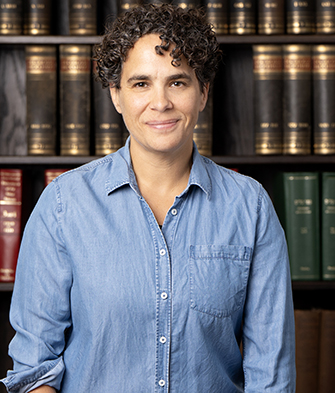
Amira Mittermaier

Levy Bruhl

Bronisław Malinowski
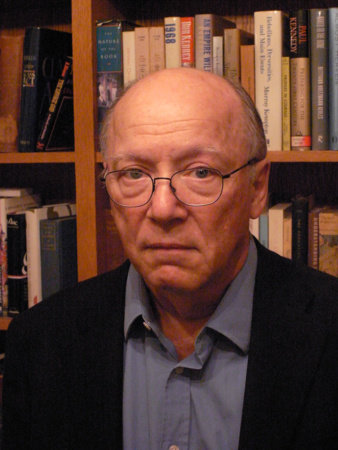
Vincent Crapanzano
The mentioned traditions prove the authenticity of ru’ya sadiqa. While one represents it as a direction from Allah, which has a strong base in Islamic epistemology. Later shows it as a part of prophecy. This confirms what I have mentioned in the introductory point that if dreams were not a valid source of knowledge, they could not carry the weight of prophetic fragments.
This comparison of dream to prophetic fragments is not merely a poetic one, but a technical and epistemological claim. Ibn Hajar al-Asqalani, in his seminal work Fath al-Bari, explains that while “Prophethood” (Nubuwwa) ended with the last prophet Muhammad [PBUH], the “remnants” or “glad tidings” (Mubashshirāt) remain.
Ru’ya Sadiqa has a rich history in shaping socio-political flow. Abdullah ibn Zaid got the idea for the Azan in a Ru’ya. When he shared it with the Prophet [PBUH], he validated it as a true vision.
To understand how Ru’ya Sadiqa serves as a true reminder, one must follow the words of the Sufis, such as Al-Ghazzali, as they describe the heart as a pure mirror. Our five senses act as a veil, distracting us with the noise of the material world. However, during sleep, when the senses are suspended, the Ruh (soul) will be freed from the confines of the body. Thus, it ascends toward the Al-Lawḥ al-Maḥfūẓ, which contains the blueprints of all past, present, and future events. Then if the dreamer’s heart is pure, it reflects the truth directly from Al-Lawh, and if the heart is clouded by sin or worldly obsession, the reflection is distorted. This is why “truthful people have the most truthful dreams.
A true dream does not always as a literal recording; rather, it often comes as a Mithal (an allegory or symbol). This is where the snake anecdote at the outset becomes vital. Here in the hierarchy of Ru’ya, God communicates through symbols that require decoding (Ta’bir). When Yusuf (PBUH) dreamt of eleven stars, the sun and the moon prostrating to him, it was not a literal cosmic incident; it was a visual clarification of political and familial hierarchy.


Ru'ya Sadiqa has a rich history in shaping socio-political flow. Abdullah ibn Zaid got the idea for the Azan in a Ru'ya. When he shared it with the Prophet [PBUH), he validated it as a true vision. This shows that a dream can be a catalyst for the most sacred of community rituals in the Islamic framework. For the Ottomans, the founder Osman Ghazi's dream of the moon entering his chest and a tree growing out of his navel was the ru'ya sadiqa that provided the spiritual legitimacy for their 600-year reign. It was seen as the god's covenant with the House of Osman.
However, in the aftermath of the 16th century, some progressive Muslim scholars, in their eagerness to make Islam a rational religious code, tried to dismiss the importance of dreams. Dream interpreters were considered false saints. These reform processes must be understood within the larger framework of colonial modernization. Colonialism not only affected Egypt's military and political systems but also brought about significant changes in the epistemological frameworks and individual identity. Timothy Mitchell writes that colonization in Egypt created a new social order that emphasized objectivity and rationality. The reform movements that emerged against this backdrop stood for moral progress and social upliftment in this world and considered the core of Islam, such as metaphysics, barzakh, and the afterlife, as secondary. The influence of these movements can be read in the experience that Amira Mittermaier shared: "When I asked for a dream interpreter, the greengrocer's reply was that it was all fake and that nowadays people are turning to psychoanalysts." They even deemed it haram to engage with dream interpretation.
Ibn Sirin's collection of dream interpretations is a major source for the Muslim community today. He outlines the possible interpretations of each dream. For instance, he writes that dreaming of bees means a prosperity or a difficult challenge awaits, and if you dream
of collecting honey, it means that you may earn a lawful profit. However, due to the prevalence of modern intellectual knowledge systems, psychoanalysis, and psychotherapy, many Muslim communities have deliberately rejected these dream interpretations as crude and outdated. Today, psychoanalysis, which holds that dreams are merely reflections of the unconscious mind, has become a preferred framework for many Muslims.
The conflict between the Islamic oneiric theology and Western psychoanalysis represents a broader clash over whose epistemological worldview should inform our understanding of reality. The gradual decline of the beautiful history of ru'ya sadiqa saw the replacement of this history by the Freudian perspective that limits the interpretation of dreams to just the unconscious. But, Islam has something to contribute that the West can never provide: an axis that connects the dreamer to God. The woman who had a snake dream, of Abdullah ibn Zayd (RA) who heard the Azan in his dream, Osman Ghazi's dream all form a part of an important tradition where dreams mean everything.